
Updated November 2026
A first Temecula summer can surprise new arrivals from the coast, especially when the AC starts running longer than it ever did near San Diego or Orange County. That extra run time can show up in your electric bill, in rooms that feel warmer than the thermostat says, and in an older system that suddenly seems tired. If you are comparing heating and air Temecula service after a move, here’s what changes inland, what a technician should check, and how to judge whether your new home’s system is sized right for the house.
Quick Answer
Homeowners moving to Temecula from the coast usually see their AC run several times longer each summer, plus real heating use on winter nights. Plan on spring and fall service, learn your filter size and location, and check the age of the system the previous owner left behind.
Key Takeaways
- In Temecula, an AC that used to cycle occasionally may run longer, use more electricity, and struggle to cool evenly once inland heat kicks in.
- Frequent cycling, warmer indoor temperatures, and uneven rooms can point to refrigerant loss, airflow trouble, or an oversized system.
- Before a heating and air visit, clear access and gather records, because a service call commonly costs $75 to $200 and a tune up $100 to $250.
- A proper home evaluation looks at square footage, insulation, windows, ducts, and room layout so the system matches the building instead of the old unit.
What changes when you move inland to Temecula and your AC starts working harder
Moving inland often means your cooling system runs longer, starts more often, and has to pull more heat out of the house than it did near the coast. In Temecula, that extra load can show up fast, especially if you came from San Diego or Orange County and your old AC barely ran for most of the year.
Warmer afternoons and hotter attic air make the system work harder to hold the thermostat setting. That matters because a unit that used to cycle occasionally may now stay on longer, use more electricity, and struggle to cool the home evenly. If you are new to heating and air Temecula, those changes can feel small at first, then show up in your monthly bill and room comfort.
Signs your AC is under more stress
- Higher energy bills: A bill that jumps without a change in how you use the house often points to longer run times or reduced efficiency.
- Frequent cycling: Short on and off bursts can mean the system is oversized, low on refrigerant, or having trouble moving air. Frequent cycling is when the unit starts, stops, then starts again in a short period.
- Warmer indoor temperatures: If the thermostat says 74 degrees but rooms feel closer to 78 or 80, the AC may not be keeping up.
- Uneven rooms: One bedroom stays cool while another feels stale or warm. That can point to airflow issues or duct problems.
These signs matter for new homeowners because a house can look fine on a showing day, then reveal comfort problems during the first hot spell. A newly purchased home should not need you to lower the thermostat all day just to stay comfortable. If the system is older, you may also see more wear on parts like the capacitor, which helps start the compressor and fan motor.
For homeowners comparing AC service options or looking at heating and cooling packages, the goal is not just colder air. It is steady cooling that matches the home size, the ductwork, and the inland climate. If you want a broader view of our HVAC services, it helps to think about how often the system now has to run in Temecula versus the coast.
How do you prep your home and questions before the heating and air visit?
Before a heating and air Temecula visit, clear the path to every indoor and outdoor unit, gather the system records you have, and write down the problems you have noticed. A few minutes of prep helps the technician get to work faster and gives you a better answer about what your heating and air conditioning Temecula system needs.
Start with access. Move boxes, furniture, pet crates, and storage bins away from the furnace, air handler, thermostat, attic hatch, and outdoor condenser. Leave a clear walkway so the technician can carry tools, open panels, and check filters without squeezing past clutter.
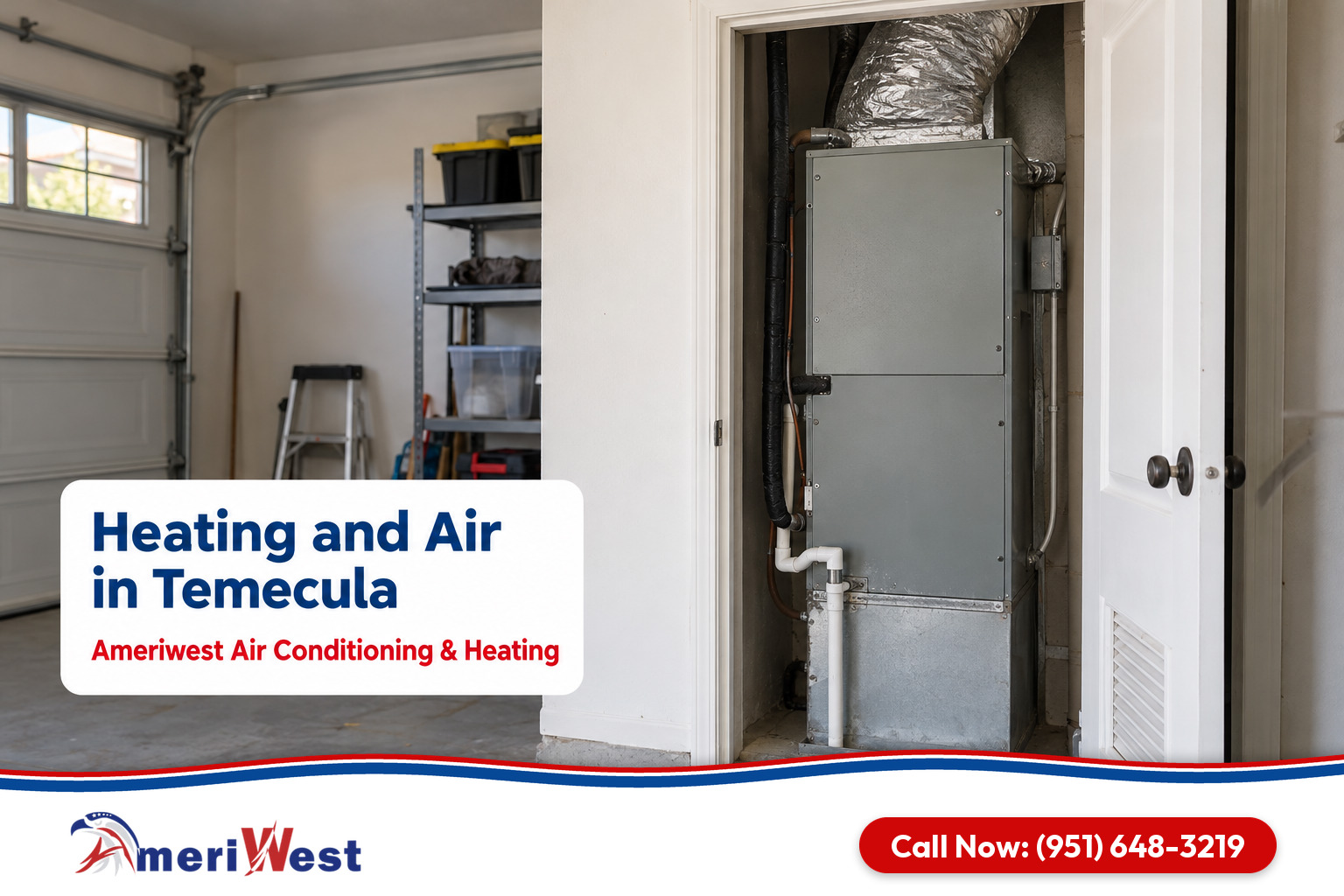
Check the indoor unit area for anything that could slow the visit. If the unit is in a closet or garage, make sure the door opens fully. If you have a condensate drain line, the pipe that carries moisture away from the system, keep that area open too. Water stains, rattling, weak airflow, warm air, uneven room temperatures, and short cycling are all good notes to share before the appointment.
Questions that help a new homeowner
Have a few direct questions ready so you can understand the system’s condition and history.
- How old is the equipment, and what model numbers are on the indoor and outdoor units?
- What service history do you see, and when was the last maintenance visit?
- Have you found any active issues, such as refrigerant loss, a dirty coil, or a weak blower motor?
- What parts look worn, and what should be watched over the next season?
- Are the filters the correct size, and how often should they be changed in this home?
If the home was just purchased, ask for any paperwork the previous owner left behind. That can include repair receipts, filter sizes, warranty papers, and past maintenance notes. A technician can work faster when the basics are already in hand.
It also helps to tell the technician what you feel in the house, not just what you see on the equipment. If the upstairs bedroom stays hot in the afternoon, or the family room feels stuffy after the sun hits the windows, say so. Those details help a Temecula HVAC visit focus on the right parts of the system instead of guessing.
For homeowners who want a broader checkup after moving in, a service visit often costs $75 to $200, while a seasonal tune up usually runs $100 to $250 in Southern California. If you want to review service options before the visit, our air conditioning services page is a good place to start.
Keep the thermostat easy to reach and make sure someone can answer questions during the appointment. Clear notes, clear access, and honest history give the technician the best shot at a useful visit.
One Ameriwest Customer’s Experience
Vanessa D. had Hector install a new unit and called him patient and thorough throughout. She said the team works very hard to reach customers when they need help and that Hector explained each part of the process clearly.
“Ricardo & Daniel did a great job explaining everything they did and what needed to be done.”
Margie P., Google review
What a Temecula heating and air technician checks when they size up a new house
Proper sizing starts with the house itself, not the old equipment left behind. When we evaluate heating and air temecula homes, we look at square footage, ceiling height, insulation quality, window size and direction, ductwork condition, and how many rooms need steady heating and cooling. Those details tell us how much air the system must move and how long it will need to run to keep the home comfortable.
Square footage gives the first estimate, but it does not tell the whole story. A 2,000 square foot home with newer insulation, good window seals, and shaded glass can behave very differently from a same size home with single pane windows and thin attic insulation. In Temecula, that difference matters because a system that worked fine near the coast may run longer and harder inland.
What affects the load calculation
Technicians use the home’s heat gain and heat loss, which means how much warmth enters in summer and escapes in winter. We look at the following:
- Insulation, especially in the attic and exterior walls, because poor insulation makes the system work longer.
- Windows, since large sunny windows can add a lot of heat in the afternoon.
- Ductwork, the sheet metal or flexible pathways that carry conditioned air, because leaks or poor design reduce airflow.
- Room layout, including vaulted ceilings, open floor plans, and closed off spaces that can change how air moves.
- Occupancy and use, such as home offices, bedrooms, and rooms that stay closed during the day.
We also check return air, which is the path that brings air back to the system, and supply air, which is the air sent into the rooms. If either side is undersized, the equipment can struggle even if the unit itself is new. That can lead to hot and cold spots, short cycling, and higher utility bills.
Accurate sizing matters because bigger is not better. An oversized system may cool the house too fast, shut off before it removes enough humidity, and leave rooms clammy or uneven. An undersized system may run nonstop on hot days, which raises wear and can make heating and cooling packages costs harder to control.
For homes in Temecula, we want the system matched to the building, not guessed from the old nameplate. That is the difference between equipment that merely turns on and an HVAC setup that actually fits the house. If ductwork needs repair or cleanup before replacement, our AC services page explains the kinds of work that can help airflow before new equipment goes in.
When a house is being evaluated for a new system, the best result comes from a full room by room look at the building envelope and the ducts. For homeowners comparing options, a Temecula HVAC company should be able to explain why one size, one airflow setup, or one efficiency level makes more sense than another.
Book Your Service Visit
Plain language system walkthroughs for new homeowners, including thermostat setup on your phone. If your new house feels hotter than it should this season, have the system checked before the next heat wave pushes run times and utility costs higher. A real person on our team answers, not a call center.
After the install or tune up what results warranty and follow up should look like
A new system or a fresh tune up should leave you with a clear paper trail, not just cooler air. In Temecula, heating and air work should come with written warranty terms, a list of what was checked, and a plan for the next maintenance visit so you know what to expect from the equipment over time.
A good warranty usually spells out the parts that are covered, the labor terms, and any conditions that could void coverage, such as skipped maintenance or tampered components. On an install, that paperwork should also tell you what was changed, what model was installed, and how the equipment was tested after startup.
For service visits, the follow up should be simple and specific. You should know if the technician found low refrigerant, a weak capacitor, a clogged filter, or dirty coils, and you should get a clear explanation of what got corrected and what still needs watching. That is especially useful for heating and cooling Temecula homes that are new to inland demand and may run longer than the last house you lived in.
What follow up should include
- Written notes on the work performed and any parts replaced
- Startup readings that show the system is cooling or heating within normal range
- Filter size and change schedule so airflow stays steady
- Next service timing, usually before the hottest or coldest part of the season
You can judge the result by how the house feels and how the system behaves. Rooms should cool or heat without long run times, airflow should feel steady at the vents, and the thermostat should hold the set temperature without frequent swings. If the system starts short cycling, makes new noises, or smells musty after service, that is a sign the follow up was not complete.
We also recommend keeping the service records with your home documents. At Ameriwest, we leave homeowners with the details they need, including what was found and what should be watched next, and every job comes with a written guarantee. That makes it easier to track warranty questions later and to compare one heating and air conditioning Temecula visit with the next.
Long term, follow up maintenance matters as much as the install itself. A clean filter, a clear condensate line, and regular coil checks help the system run under lower strain, which can protect comfort and reduce surprise breakdowns. If you want to compare service options for the house you just bought, our HVAC packages and AC service packages are a good place to start. For company details, see our about Ameriwest page.
How much heating and cooling in Temecula should cost in 2026 and how to book the right visit
For most homeowners, a Temecula heating and air service call in 2026 commonly starts around $75 to $200 for the diagnostic, and a typical AC repair often lands between $150 and $650 depending on the part and labor. New system pricing is usually much higher, with a new central AC installed often running $6,500 to $14,000 and a complete heating and cooling system often ranging from $9,000 to $20,000.
Your final price depends on the age of the home, the brand and size of the equipment, access to the attic or closet, and whether the repair is simple or tied to a larger issue like refrigerant loss or failing controls. A capacitor is the part that helps the motor start, and a problem there is usually cheaper than a compressor replacement, which is one of the costliest repairs.
What to compare before you approve work
Get at least two estimates when the repair is not urgent. A qualified heating and cooling Temecula contractor should explain what failed, what can wait, and what is being replaced now versus later.
- Look for a written scope that names the part, the labor, and any refrigerant charge.
- Ask how the technician tested the system, not just what they think is wrong.
- Compare warranty terms, cleanup, and whether the quote is in writing before work starts.
Homes in Temecula that came from coastal areas often need more attention to airflow and maintenance because inland heat pushes the system harder for longer stretches. That can make routine work more valuable, like a seasonal tune up visit, which commonly costs $100 to $250 in Southern California.
If you are comparing a new install, ask about the heat source, the air handler, and the ductwork together. A home with weak ducts or the wrong size unit can waste energy even if the equipment itself is new. Our team at Ameriwest Air Conditioning & Heating shows you what we find and gives written pricing before work starts, and every job comes with a written guarantee.
For a newly purchased home in Temecula, it helps to schedule a check before the first hot spell or cold snap so you are not rushing later. You can review our AC service options, our heating service options, or book a service visit now so your system is ready for the season ahead.
Heating and Air in Temecula: Your Questions Answered
How much does it cost to run AC in Temecula?
Most homeowners in Temecula pay more to run AC in summer than they did near the coast because the system runs longer and cycles more often. If your unit is clean and sized right, the main cost is usually electricity, and the bigger clue is a bill that climbs without a change in thermostat use or household habits.
When should I service my HVAC in Temecula?
We recommend servicing your HVAC in spring and again in fall. A seasonal tune up visit commonly runs $100 to $250 in Southern California, and that timing helps catch dirty coils, weak capacitors, low airflow, and drain problems before the hottest or coldest stretch of the year.
How do I find my HVAC filter size?
Check the side edge of the existing filter, the filter slot, or the return grille for the printed size. If you do not see it, pull the old filter out and read the numbers on the frame, then match the same length, width, and thickness before buying a replacement.
What are the signs my HVAC needs repair in Temecula?
Short cycling, warm rooms, weak airflow, and a sudden jump in utility use are common repair signs. Call a professional if the system is blowing warm air, icing up, making new noises, or failing to keep up during a hot Temecula afternoon, since those problems can point to refrigerant loss, a bad capacitor, or airflow trouble.
Can I replace my HVAC filter myself?
Yes, most homeowners can replace a standard HVAC filter themselves in a few minutes. Make sure the arrow on the frame points toward the blower, and replace it every 1 to 3 months if you have pets, dust, or heavy AC use.
How much does a heating and air service call cost in Temecula?
A heating and air service call or diagnostic commonly costs $75 to $200 in Southern California. That visit lets us check the system, find the cause of the problem, and give pricing before any work starts, with no change orders from Ameriwest.
Is it safe to keep running the AC if it is not cooling well?
It is not a good idea to keep running it for long if the house is getting warmer and the system is struggling. Continued use can turn a small issue into a bigger repair, so call for service right away if you hear buzzing, smell something burning, or see ice on the indoor coil.