Serving Los Angeles | Orange | Riverside | San Bernardino

Questions about whole-home humidifier? Call (951) 574-1698 or send us a message and a real technician will get back to you.

Dry skin, static shocks, cracking wood floors, and a house that always feels colder than the thermostat says are common signs that indoor humidity is too low. A whole-home humidifier installed directly into your HVAC system keeps humidity balanced in every room automatically, without a single portable unit to refill. We serve homes and businesses across Orange County, Los Angeles County, Riverside County, and San Bernardino County, including Irvine, Riverside, Corona, Anaheim, Ontario, Huntington Beach, and more than 40 other cities.
Here’s how a whole-home humidifier gets installed into your existing system.
Humidity Assessment
We check your home's current humidity levels and HVAC setup.
Professional Installation
The humidifier is installed directly into your ductwork.
Calibration And Testing
We set and test the humidistat for your ideal comfort level.
The ideal indoor humidity range is generally 30 to 50 percent. Below that, you’ll notice dry skin, static electricity, and wood floors or furniture that start to crack.
Because a whole-home humidifier ties directly into your ductwork and thermostat system, it treats every room evenly and adjusts automatically, unlike a portable unit that only covers one space and needs constant refilling.
If static shocks and dry skin are a winter constant, your home’s humidity is probably too low. Free assessments across all four counties we serve.
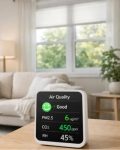
A whole-home humidifier only works well if it’s sized and installed correctly. Here’s what our process covers.



Ameriwest Home Services proudly partners with Greensky, Optimus Financing, and Service Finance to provide flexible HVAC financing options, ensuring you get the expert service you need with payment plans that suit your budget

Use contact AmeriWest and share the current HVAC type, areas that feel dry, any condensation history, water quality concerns, and available utility space. AmeriWest can compare equipment types, review installation requirements, and explain how humidification fits with other air-quality solutions.
Possibly, but the devices have different purposes and must be installed without creating unsafe exposure or component conflicts. A UV germicidal lamps targets selected HVAC surfaces or air, while a humidifier adds moisture. A technician should evaluate placement, materials, wiring, controls, and condensation risk before combining indoor-air-quality equipment.
Yes. The schedule depends on the model and water quality. Service may include replacing a water panel or steam canister, removing mineral buildup, checking the water valve and drain, cleaning components, and testing the humidistat. Coordinate the task with heating maintenance or ask whether it is included in AmeriWest’s maintenance membership.
Any humidifier can contribute to excess moisture if it is oversized, set too high, leaking, poorly drained, or not maintained. Correct sizing, controls, installation, and seasonal monitoring reduce that risk. Existing leaks or contaminated duct materials require separate diagnosis; review ductwork repair and cleaning and do not use humidification to mask a building-moisture problem.
The best type depends on required output, duct layout, HVAC runtime, available power, water quality, drainage, space, and maintenance preferences. Steam units can produce moisture without relying on furnace heat, while bypass and fan-powered models use different airflow arrangements. Request an evaluation through contact AmeriWest rather than selecting by square footage alone.
There is no single setting that fits every house and weather condition. The safe and comfortable range depends on outdoor temperature, window performance, insulation, air leakage, and whether condensation appears. Start conservatively, monitor with a reliable hygrometer, and lower the setting if moisture collects on windows or cool surfaces. AmeriWest can assess control issues during heating maintenance.
A central system can serve multiple rooms through the HVAC distribution system and uses a dedicated humidistat or integrated control. Portable units treat a smaller area and require separate filling and cleaning. Both need maintenance. A central system also needs compatible equipment, water access, drainage, electrical provisions, and professional commissioning through an indoor air quality services provider.
A whole home humidifier is installed with compatible HVAC equipment to add controlled moisture to air distributed through the duct system. Depending on the design, it may use steam, bypass airflow, or a powered fan. AmeriWest should measure conditions and review the home’s heating services and ductwork repair and cleaning before recommending a system.