Serving Los Angeles | Orange | Riverside | San Bernardino

Ask about your attic, your windows and your AC before you buy anything. Call (951) 574-1698 and we will give you an honest answer.

By sundown the air outside is often cooler than the air in your house, and most of us keep the windows shut anyway. A whole house fan closes that gap. It pulls cool evening air in through open windows and pushes the hot air out through the attic. Whole house fan installation at AmeriWest starts with a free estimate and a look at your attic venting, because a fan without enough vent area causes more trouble than it solves. We will also say so when your AC is still the better tool.
A whole house fan runs on a simple rhythm. Here is how a typical day goes.
Open a few windows
Open windows in the rooms you want cooled, so the air has a path in.
Switch the fan on
It pulls cooler outdoor air through the house and pushes hot air up and out through the attic.
Shut it off in time
Close up when the air outside turns bad or the day heats up, and let the AC take over.
It is not an air conditioner. A whole house fan cannot cool a house below the outdoor temperature, so most homes still need AC in hot periods. A correctly sized fan can replace several hours of AC runtime on a mild evening.
Treat the whole house fan air conditioner question as a partnership, not a replacement, and compare the two honestly before you buy.


On a wildfire smoke day or any day with poor air outside, a whole house fan stays off, because it pulls outdoor air straight in. We tell you that before you buy, not after the install.
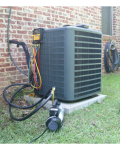

A whole house fan moves air. An air conditioner removes heat and moisture. The fan runs on little power and shines on mild evenings, while the AC carries the house through heat waves. Many homes use a whole house fan with AC, fan in the evening and AC in the afternoon. A whole house fan moves air from the living space into the attic, while an attic fan only ventilates the attic. See AC maintenance.

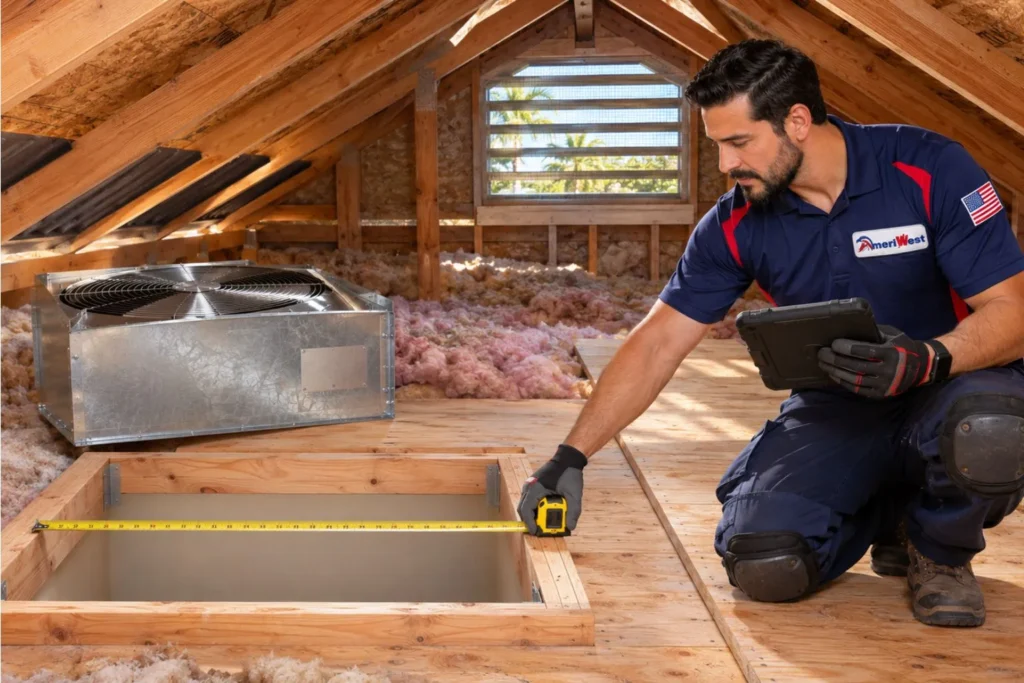
The fan is sized to the home, and we check and size the attic venting on every job, adding vents when needed instead of selling them later. An insulated shutter seals the opening to limit winter heat loss. An undersized fan barely cools, and an oversized one without enough venting causes problems. Most installs finish in one day. Book a free estimate and we will measure up.
A large exhaust fan can change the air pressure and make combustion appliances and fireplaces backdraft, so we check for that. Keep it off during wildfire smoke or high particle levels. Open selected windows so air has a safe path. For smoky days, see our wildfire smoke air filtration page, and for general air concerns, our indoor air quality assessment.



Want to spread the cost? Our lending partners offer monthly payment plans, and the lender sets approval and terms. Military, veterans, firefighters, police and EMTs save 20 percent with proof of service. See HVAC financing.

We install in Hemet, Beaumont, Temecula, Palm Desert and Indio, where evenings often cool off after a hot day. Our promises are plain.

Pros: it uses far less power than an AC and can replace several hours of AC runtime on a mild evening. Cons: it cannot cool below the outdoor temperature, needs open windows and good attic venting, and must stay off during smoke. Most homes still need AC in hot periods.
They do different jobs. A whole house fan moves cool evening air through the house, and an AC cools and dehumidifies on demand. When people compare ac vs whole house fan, most homes end up wanting both, since a fan cannot cool below the outdoor temperature.
Yes, but not at the same time. Use the fan on mild evenings with windows open, then close up and switch to the AC when the day heats up. Running both together wastes the cool air the AC makes, since the fan is pulling outdoor air in.
It depends on the fan size and the attic venting, so we give you a firm number after looking at your home. Call (951) 574-1698 to book. You can also spread the payments through a lender we work with, and military and first responders save 20 percent.
Keep it off during wildfire smoke, high particle levels or any poor air outdoors, and when you have no windows open for air to enter. Combustion appliances and fireplaces can backdraft if the fan changes the pressure, so we check that before install.
Most installs finish in one day. Attic venting changes or a tricky ceiling layout can add time, so ask for the schedule at your estimate. We check venting first on every job so there are no surprises on the day.
A whole house fan moves air from your living space into the attic, which cools the rooms below. An attic fan only ventilates the attic and does nothing for the living space. They are separate products with different goals, and one does not replace the other.
Call (951) 574-1698 and describe what the fan is doing. We will tell you honestly whether it is a whole house fan repair we can handle or a fan that has outlived its use. Whole house fan repairs go faster when you describe the noise and symptoms.
Explore more from Ameriwest: