
Updated November 2026
Santa Ana winds can push dust into your Riverside home, and wildfire smoke can hang in the air long after the weather clears. That can leave you sneezing, wiping surfaces more often, and wondering if your filter is doing enough. In this article, we walk through the common causes behind indoor air quality Riverside CA concerns and what to check first before you spend more on equipment.
Quick Answer
To improve indoor air quality in Riverside, use a properly fitted filter, change it often, keep windows closed during smoke or dusty wind, and run the system fan. If problems persist, ask about purifiers, ventilation or duct repair.
Key Takeaways
- Dust, smoke, pet dander, and cooking particles are the most common indoor air problems Riverside homeowners notice first.
- A better HVAC filter often costs $15 to $60 and can help catch more fine dust and dander before it spreads.
- Running the fan, closing windows on smoky days, and changing filters on schedule can make a noticeable difference within 1 to 3 months.
- If odors, headaches, or dust keep returning, a professional air quality check can point to filtration, ventilation, or dirty ductwork.
Indoor air quality in Riverside starts with dust, smoke, and everyday air you breathe at home
Indoor air quality Riverside CA homes deal with most often starts with what gets pulled inside, not just what comes from the system. Dust from Santa Ana winds, wildfire smoke, pet dander, and cooking particles can build up fast, then stay in the air you breathe for hours.
In Riverside, that matters because your home’s air changes every time doors open, windows crack, or the HVAC fan runs. Even a clean home can end up with higher particle levels indoors than outside if the filter is weak, dirty, or changed too late.
What usually affects the air inside your home
- Windblown dust: Fine dirt gets in around doors, windows, and gaps in the home, then settles on vents, furniture, and floors.
- Wildfire smoke: Smoke can enter through open windows and small leaks, leaving odors and tiny particles that are hard to remove.
- Pet dander: Skin flakes from cats and dogs stay suspended in the air and collect in returns, carpets, and upholstery.
- Cooking pollutants: Frying, roasting, and even toasting can release smoke, grease, and odors that spread through the house.
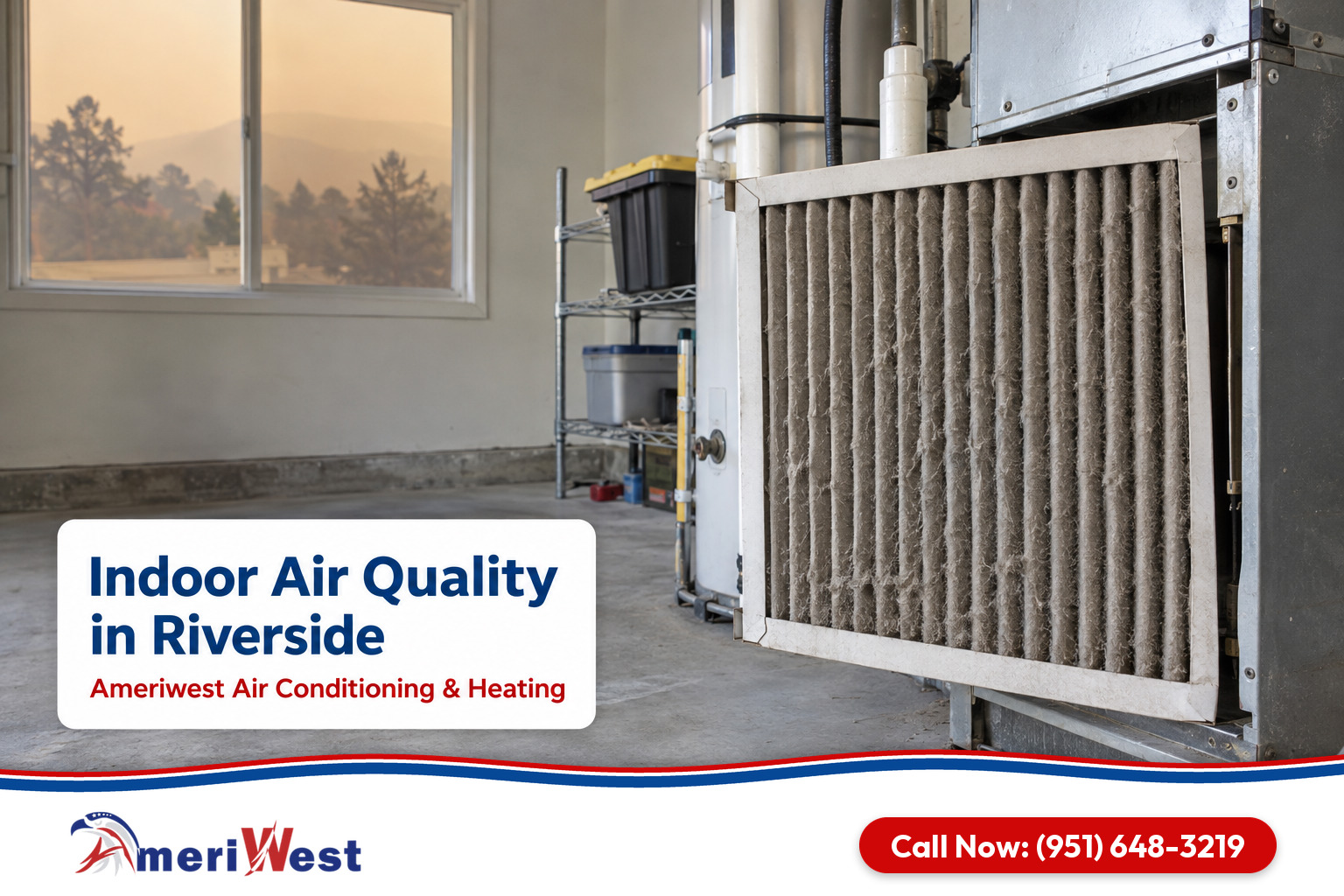
If you want to improve indoor air quality Riverside homeowners should start with the basics. Use a better filter that fits your system, swap it on schedule, close windows on smoky days, and run the fan when indoor odors or particles build up. A better HVAC filter option can help catch more fine dust and dander than a basic throwaway filter.
Cooking also matters more than many people expect. Run the range hood during and after cooking, keep lids on pans when possible, and let the kitchen clear out before you spread air to the rest of the house.
For homes that still feel stuffy or dusty, a deeper look may be needed. A professional indoor air quality check can show whether the problem is filtration, ventilation, or dirty ductwork. In some homes, a whole home air purifier or duct cleaning is the next step, especially when the same dust or smoke smell keeps coming back.
The goal is not to chase every particle. It is to understand what is getting into your home, then choose the right fix for the way you live and breathe every day in Riverside.
Why Santa Ana wind dust, wildfire smoke, pet dander, and cooking make your home feel harder to breathe in
Santa Ana wind dust, wildfire smoke, pet dander, and cooking fumes all add tiny particles and gases to the air, and those contaminants stay indoors longer than most homeowners expect. In Riverside, that can make indoor air quality Riverside CA feel worse fast, especially when windows stay closed and the HVAC system keeps recirculating the same air.
Dust from strong wind events brings in fine soil and debris that can irritate your nose, throat, and eyes. Wildfire smoke is even smaller, so it can move deep into the lungs and linger in fabrics, filters, and ductwork. If you already deal with asthma, allergies, or a sensitive airway, those particles can turn a normal afternoon into a hard breathing day.
Everyday sources keep building up indoors
Pet dander is made of tiny skin flakes and dried saliva proteins, not just loose fur. That means even a clean looking room can trigger sneezing, congestion, or itchy eyes if the air keeps moving those particles around. Cooking adds its own load, too, especially from frying, broiling, and gas burners that release odor, grease, and ultra fine particles.
- Better filtration: A high quality filter can catch more dust and dander before it spreads through the house. Many homeowners start with a filter upgrade, which often costs $15 to $60.
- Regular filter changes: A clogged filter restricts airflow and lets more debris bypass the system, so make sure it is replaced on schedule.
- Fan use on smoky days: Running the blower fan can help move air through the filter more often, as long as the filter is sized for the job.
- Window control: Close windows when smoke or dust levels rise, then air out the home later when conditions improve.
Pollen can make the problem worse, even inside the house. It clings to shoes, clothes, hair, and pets, then settles on furniture and vents. If local weather alerts show poor air quality, that is a good time to keep the system running in filtered mode and limit outside air entering the home.
Some homes need more than a better filter to improve indoor air quality Riverside. If smoke, odors, or fine dust keep returning, a whole home purifier, fresh air ventilation, or duct work inspection can help reduce the load that keeps cycling through your rooms. For homes with persistent odor and particle problems, a whole home air purifier or a BioGuard filter upgrade may be a better fit than a basic filter alone.
When the air feels stale after cooking or smoky after windy days, that is usually a sign the home needs a closer look at airflow, filtration, and how contaminants are moving through the system. That is the practical side of indoor air quality near me, because the answer is often in the equipment, not just the weather.
Straight From a Service Call
James B. needed his ductwork repiped. Esau worked hard to finish it and Daniel helped for the last several hours, and they cleaned up everything before they left.
“Very detailed cleaning, no messes and he gave me some tips.”
Scott H., Google review
What signs tell you your Riverside home air quality needs a closer look?
Poor indoor air quality in Riverside CA often shows up as symptoms you notice only when you are inside, like frequent headaches, itchy eyes, coughing, or a stuffy nose that seems to calm down after you leave the house. If those problems get worse after a dusty day, a recent wildfire, or long periods with the windows closed, your air is worth a closer look.
Health changes are one of the clearest clues. A home can also feel off before anyone gets sick, especially if you notice stale odors, dust settling fast on furniture, or rooms that feel dry and irritating even when the thermostat is set right.
Common signs to watch for
- Persistent coughing or throat irritation indoors
- Eye burning, sneezing, or increased allergy symptoms
- Headaches that seem to start at home
- Musty, smoky, or lingering cooking odors
- Dust that returns quickly after cleaning
- Breathing that feels harder in one room than another
These signs do not always mean you need major equipment changes. Sometimes the fix is simple, like a better filter, a fresh filter swap, or running the fan longer after cooking. In many homes, keeping windows closed during smoke events and checking the filter every 1 to 3 months can make a noticeable difference.
If the symptoms keep coming back, the problem may be more than dust. Poorly sealed ductwork can pull in attic dust, a dirty evaporator coil can hold onto particles, and weak ventilation can let odors linger. A condensate line, the drain that removes water from your cooling system, can also cause musty smells if it is partially blocked.
That is the point where homeowners often start looking for indoor air quality solutions instead of guessing. We also see many people compare filtration options such as a Bioguard powered filter or a whole home air purifier when allergy symptoms keep returning.
If you live with ongoing headaches, irritation, or coughing and the comfort level in the house keeps changing, that is a good sign to look into the air quality in my home Riverside homeowners often talk about before it turns into a bigger comfort issue.
Book Your Service Visit
Indoor air quality upgrades from BioGuard filters to UV lamps, installed by licensed HVAC techs instead of a sales crew. If your home still feels stuffy after a filter change, the problem can get harder to trace as dust and smoke build up. A closer look now can help you fix the cause before it turns into a bigger comfort issue. A real person on our team answers, not a call center.
What it costs to improve indoor air quality in Riverside homes in 2026
Most homeowners trying to improve indoor air quality riverside ca can start with a better filter for $15 to $60, then move up to a seasonal tune up visit for $100 to $250 if airflow is weak or the system is dusty. In Riverside, the right fix depends on the home size, the age of the ducts, and how much smoke, pet dander, or cooking residue your system has to handle.
A basic upgrade is often the first step. A high quality filter can catch more fine dust and smoke particles, while a BioGuard filter can be a stronger option for homes that want better everyday filtration without changing the whole system.
Common indoor air quality costs homeowners see
- Air filter replacement: $15 to $60, depending on size and efficiency
- Whole home air purifier: often $3,500 to $7,500 installed for a single zone style system, with simpler portable units costing less
- UV lamp installed: $400 to $1,000 for added treatment inside the HVAC system
- Whole home humidifier: $600 to $1,600 when dry air is part of the comfort problem
- Duct cleaning: $400 to $1,000 for a whole home cleaning when buildup is heavy
- Duct sealing or repair: $500 to $3,000 if leaks, gaps, or disconnected runs are sending dirty air where it should not go
Ventilation upgrades can cost more because they change how air moves through the house. If your current HVAC system is older, has limited return air, or struggles with static pressure, which is the resistance air faces as it moves through ducts and equipment, the project may need more labor and parts. That is especially true in larger homes or homes with additions.
If you are comparing options for indoor air quality near me, weigh the cost against the comfort gain. Better filtration can mean less dust on surfaces and fewer odors after cooking. Duct repairs can help reduce hot and cold spots, and cleaner airflow can make your system feel less strained.
For homeowners who want a deeper look before spending on equipment, a professional indoor air quality assessment usually runs $300 to $800 and can show whether the real issue is filtration, ventilation, or ductwork. If you are ready to improve indoor air quality in Riverside, that kind of diagnosis helps you spend on the right fix instead of guessing.
When filters are enough and when to call for purifiers, ventilation, or ductwork help
A good HVAC filter handles everyday dust, pet hair, and normal indoor debris. For indoor air quality Riverside CA homeowners often need more when smoke, odors, or stale air keep coming back after filter changes and regular running of the system.
Start with the basics. Use the right filter for your system, replace it on schedule, keep windows closed on smoky days, and run the fan when you want more air circulation. A better filter can help with day to day particles, but it cannot fix poor duct design, heavy smoke intrusion, or a home that simply does not get enough fresh air.
When a filter is probably enough
- Dust settles on furniture but the air feels normal after you change the filter.
- You have no lingering odors after cooking or cleaning.
- Your system runs normally and the filter is not loading up too fast.
- You only notice irritation during short dust or pollen events.
In those cases, a quality filter and regular maintenance may be all you need. We can also check whether a BioGuard powered filter makes sense for your system and your goals.
When to think about purifiers, ventilation, or ductwork help
Call for a closer look when the same problems keep returning. Severe wildfire smoke days, cooking odors that hang around for hours, musty rooms, visible dust blowing from registers, or one room that always feels stuffy can point to a bigger issue than the filter alone can handle.
That is when indoor air quality near me searches usually lead homeowners to options like a whole home purifier, added ventilation, or duct inspection. For example, a dust free air purifier can help with fine particles that pass through standard filtration, while UV germicidal lamps are used to target growth on indoor coil surfaces.
Some homes also need ductwork attention. Leaky, disconnected, or dirty ducts can spread dust and smoke through the house and make air quality in my home Riverside feel worse even with a new filter in place. If you want a professional look at the full system, our indoor air quality service can help sort out what is worth fixing first.
At Ameriwest Air Conditioning & Heating, we show you what we find and give written pricing before work starts, with a written guarantee on every job. If you want Riverside home air quality help, a thorough inspection can tell you whether a filter change is enough or if the next step should be purification, ventilation, or duct repair.
What do homeowners ask about indoor air quality in Riverside?
How can I improve air quality in my home?
Start with the basics, use the right filter, change it on schedule, and keep windows closed during dusty or smoky weather. In Riverside, that usually means checking the filter every 1 to 3 months and running the system fan when indoor particles are building up. If the air still feels stale, a professional air quality check can show if filtration, ventilation, or ductwork needs attention.
What filter is best for wildfire smoke?
A higher efficiency pleated filter that fits your system is usually the best first step for wildfire smoke. Basic filters often cost $15 to $60, but the key is making sure the filter is the right size and changed often enough to keep airflow moving. If smoke odors keep coming back, you may need more than a filter, such as a whole home purifier or duct inspection.
Can my HVAC system help with dust from Santa Ana winds?
Yes, your HVAC system can help catch more of that dust before it spreads through the house. A clean, properly fitted filter and regular fan use can reduce how much fine dust settles on furniture and vents, especially during windy days in Riverside. If dust keeps building up fast, we may need to check for leaks, dirty ductwork, or a filter that is too weak for the home.
How often should I change my air filter for better indoor air quality?
Most Riverside homeowners should check the filter every 1 to 3 months, then replace it sooner if the home gets dusty or someone has allergies. A clogged filter can restrict airflow and let more debris circulate through the house. If you use the fan often or have pets, you may need to change it more often.
How much does a professional indoor air quality check cost in Southern California?
A professional air quality assessment commonly costs $300 to $800 in Southern California. That visit can help identify whether the problem is the filter, the ductwork, ventilation, or a buildup of dust and smoke particles. If the home keeps smelling smoky or stuffy after filter changes, that is a good time to call us.
Do I need an air purifier if my home still smells smoky after a filter change?
You might, if the smell keeps returning after you’ve changed the filter and kept windows closed during smoke events. A whole home purifier can help with fine particles that basic filtration may miss, especially in homes where odors spread through multiple rooms. The right fix depends on the source, so a professional look at airflow and ductwork can save time and money.
How long does it take to notice a difference after improving indoor air quality?
Many homeowners notice a difference within 1 to 3 months if they change filters on time and cut down on dust and smoke coming into the house. Faster changes can happen after a bad filter is replaced, but deeper issues like dirty ducts or weak ventilation take longer to correct. If symptoms keep coming back after a few weeks, call a professional for a closer look.