Serving Los Angeles | Orange | Riverside | San Bernardino

Clothes taking two cycles to dry? Call (951) 574-1698 and our Riverside team will help you sort out what to check.

If towels come out damp after a full cycle, the laundry room feels like a sauna or the dryer is hot to the touch, the vent is a prime suspect. Lint is dry and burns easily, and a packed vent is a known cause of dryer fires. AmeriWest offers dryer vent cleaning out of our Riverside office. This page explains the warning signs, what cleaning involves and what you can do yourself.
Any one of these is worth checking. Two or three together is a strong hint.
Slow Drying
Clothes need a second cycle, or come out hot and still damp.
Heat and Smell
The laundry room is warm, or you smell something like burnt dust.
Lint Outside
Lint collects at the outside vent hood, or the flap does not open.
A dryer pushes hot, wet air through a duct to the outdoors. Lint slips past the lint trap and settles on the duct walls, and every bend gives it a place to catch. As the passage narrows, the dryer works harder, runs hotter and takes longer to dry the same load.
Long runs make it worse. The longer the path to the outside, the more lint a vent tends to hold.


A dryer makes heat, and a clogged vent traps it along with dry lint. Cleaning is cheap compared with a fire, so do not wait for the second cycle to become a habit.

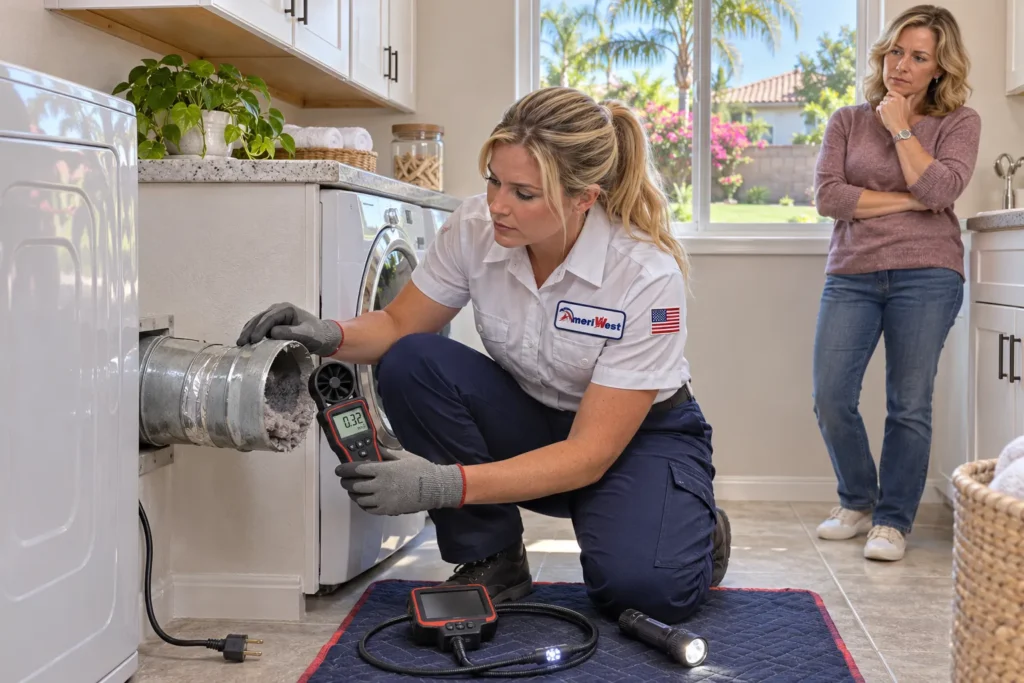
Beyond slow drying, watch for a dryer that shuts off before the load is done, a vent flap that barely moves, or lint blowing back into the room. In many tract homes the vent runs a long way through a wall or the attic to reach the roof or outside wall, so a clog can sit out of sight. If you smell smoke or see flames, leave and call 911. See also our notes on indoor air quality.
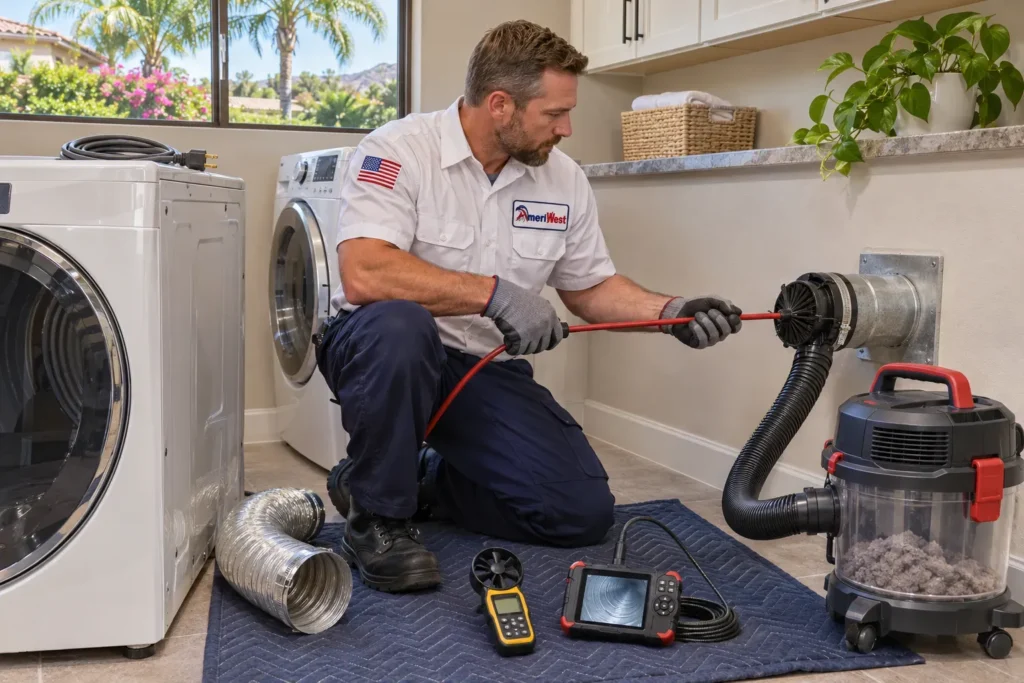
Cleaning typically means disconnecting the duct from the dryer, running brushes or a vacuum along the full length, clearing the outside hood and then checking that air moves freely. Crushed, kinked or damaged duct may need to be replaced rather than cleaned. Roof exits and long runs can limit access, so ask what can be reached. Unlike air duct cleaning, this is a separate system from your HVAC ducts.
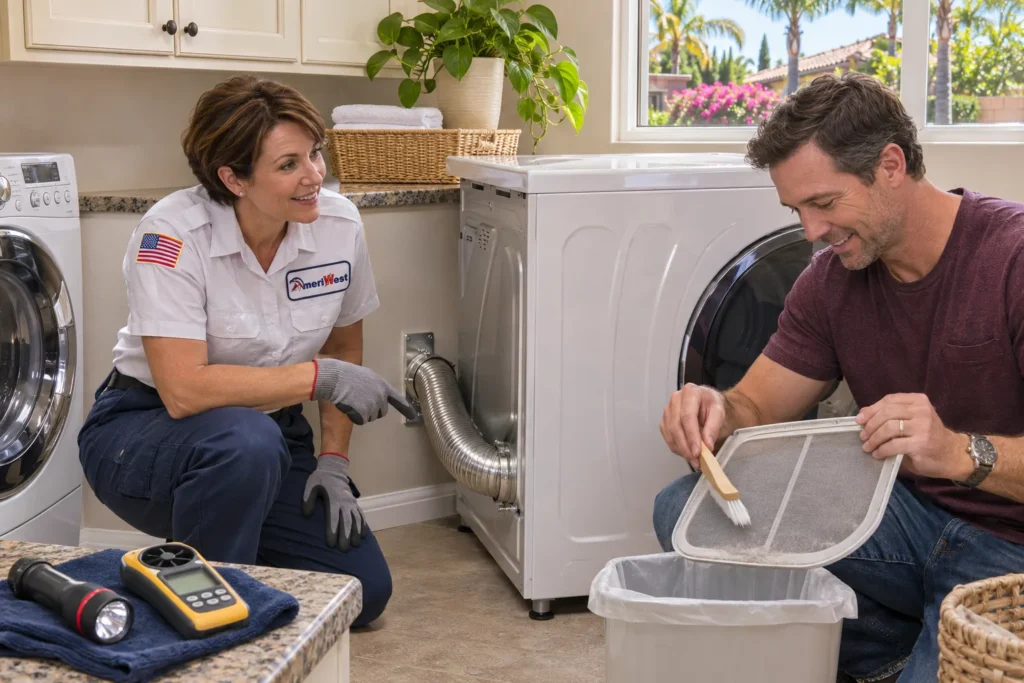
Clean the lint trap before every load. Use rigid or semi rigid metal duct instead of plastic or foil, which can sag and trap lint. Do not crush the duct when you push the dryer back against the wall. Keep the outside hood clear, and never dry anything soaked in cooking oil or fuel. A yearly look is a sensible habit, and HVAC maintenance visits are a natural time to ask.
We will tell you what we find and what is worth doing. Reviews of our work keep mentioning fair pricing, and we aim to keep it that way.
We work in Jurupa Valley, Norco, Perris, Lake Elsinore, Banning, Indio and Cathedral City.

Many experts suggest at least once a year, and more often for a big household or heavy laundry loads. Long vent runs, bends and pets all add lint. If your dryer takes more than one cycle, do not wait for the calendar.
The most common signs are clothes that stay damp after a full cycle, a hot dryer or laundry room, a burnt smell, lint around the outside hood and a flap that does not open. Any of these deserves a look, and several together mean the vent is probably restricted.
Yes, a blocked vent is a known cause of dryer fires. Lint is dry and easy to ignite, and a restricted vent traps heat. We cannot say how likely it is in your home, but cleaning removes the fuel. If you see smoke, leave and call 911.
Yes. Call (951) 574-1698 or book a service online, and ask what is included, what we can reach and what the visit costs before you commit. Long runs, roof exits and damaged duct can change the scope, so it helps to describe where your vent goes.
We do not publish a dryer vent cleaning cost here, because it depends on how long the run is and how easy it is to reach. Call (951) 574-1698 and ask for the price and what is included before booking. Our Freedom Plan covers a different set of services.
You can clear the lint trap and the area behind the dryer, and many people use a brush kit on short runs. Long or hidden runs are harder, and pushing lint further in can make a clog worse. Never work on a gas dryer connection yourself.
It is not a good choice. Plastic or thin foil duct can sag, trap lint and burn more easily than metal. Rigid or semi rigid metal duct is the usual recommendation. If your duct is damaged or crushed, replacing it beats cleaning it.
No. The dryer vent carries wet exhaust air outdoors and is separate from the ducts that carry heated and cooled air. For those, see our duct repair and sealing page. Both can affect how your home feels and runs.
Explore more from Ameriwest: